Autism American Flag SVG: Graphics for Crafts & Branding
As a graphic designer who regularly selects design assets for client work—especially for handmade businesses, local awareness campaigns, and inclusive product launches—I recently evaluated the Autism American Flag SVG with a specific brief in mind: a spring-themed boutique collection for an Etsy shop supporting neurodiverse families. The goal was to create cohesive, emotionally resonant packaging, social media graphics, and limited-edition apparel—all while maintaining brand integrity and visual polish.
A First Impression That Balances Symbolism and Simplicity
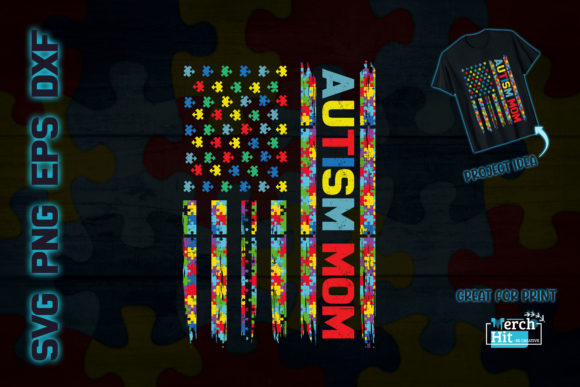
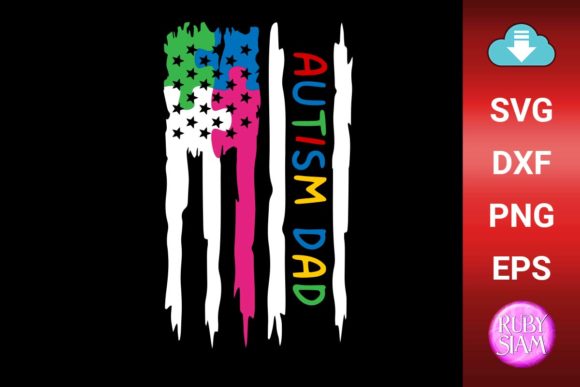
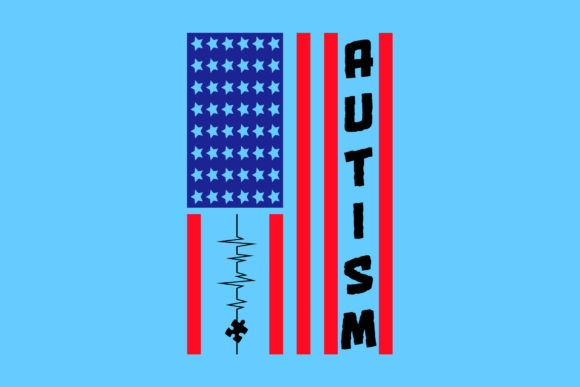
The Autism American Flag SVG delivers immediate visual clarity. It merges the familiar structure of the U.S. flag with the puzzle-piece motif and signature blue-and-gold color palette associated with autism awareness. Unlike overly literal or cluttered interpretations, this version uses clean vector lines, balanced negative space, and intentional spacing—making it feel like a considered graphic design asset, not just clipart. It reads as modern design, not generic illustration.
Where This SVG Shines in Real Client Projects
In our boutique campaign, the Autism American Flag SVG became a unifying visual thread across multiple touchpoints:
- Product mockups: Applied to tote bags, mugs, and t-shirt designs, it scaled beautifully without pixelation—thanks to its native SVG format. On soft cotton mockups, the crisp edges preserved emotional warmth without looking clinical.
- Social media graphics: Used as a central hero element in Instagram carousels and Pinterest pins, it anchored messaging about inclusion and community. Paired with a warm sans serif font (like Poppins or Montserrat), it reinforced approachability and authenticity.
- Printable design & packaging: As a subtle watermark on thank-you cards and tissue paper, it added thematic resonance without overwhelming the minimalist aesthetic of the brand’s kraft-box packaging.
- Cricut project & sublimation design: Tested successfully on both vinyl-cut decals and full-sublimation blanks—no layer misalignment or path complexity issues. The clean paths made it ideal for crafters and small business owners managing their own production.
- Editorial design & blog visuals: Repurposed as a decorative accent in blog headers and newsletter banners, it elevated content around Autism Acceptance Month without sacrificing readability or tone.
Smart Applications Beyond Apparel
While marketed as a t-shirt design digital file, this SVG design extends far beyond wearable merch. For designers building brand identity systems, it functions well as a supporting symbol—not a primary logo, but a trusted secondary mark. It’s especially effective in themed collections where consistency matters: seasonal campaigns, awareness-driven print-on-demand drops, or collaborative Etsy product bundles. As part of a broader design bundle, it adds emotional texture alongside complementary icons, patterns, or typography treatments.
Use With Intention—Not Everywhere
This isn’t a universal asset. Its symbolic weight and stylistic specificity mean it should be used deliberately:
- Avoid small sizes: Below 1.5 inches wide, the puzzle-piece details blur. Not ideal for tiny sticker designs or lapel pins unless simplified first.
- Steer clear of low-contrast backgrounds: On light gray or pastel backgrounds, the blue elements can recede. Always test contrast—especially for accessibility compliance.
- Reserve for expressive contexts: It doesn’t suit corporate annual reports or formal healthcare branding. Its voice is personal, grassroots, and heartfelt—best matched with handmade business storytelling, not sterile professionalism.
- Don’t force it into minimalist hierarchies: When paired with ultra-thin fonts or monochrome palettes, it risks visual dissonance. Let it breathe with generous whitespace and warm supporting tones.
Designer Notes You Can’t Skip
Before committing to the Autism American Flag SVG for a client or commercial design, run these practical checks:
- Test it in black and white—does the shape still read clearly? (It does, but only if stroke weights remain consistent.)
- Preview on both light and dark website backgrounds using real CSS previews—not just mockup thumbnails.
- Place it inside actual product mockups (not just flat PNGs) to assess how lighting and texture affect perception.
- Verify print quality at 300 DPI—especially if used for brochures or posters. Vector scaling helps, but raster exports must be generated correctly.
- Inspect the ZIP contents: confirm SVG editability (check for grouped layers, named paths), PNG transparency (no white fringing), and absence of embedded fonts or raster effects.
- Compare pairing options: it harmonizes best with friendly sans serifs and gentle script fonts—not sharp display or rigid serif styles.
- Confirm commercial license terms. This is non-negotiable for print-on-demand sellers, Etsy product creators, or any digital product intended for resale.
Why It Works for Creative Marketplaces—and Your Clients
The Autism American Flag SVG succeeds because it bridges symbolism and usability. It doesn’t shout—it invites. For marketers launching awareness initiatives, crafters building themed kits, or bloggers designing printable wall art, it offers instant emotional resonance without sacrificing technical quality. In a sea of overdesigned clipart and underdeveloped illustrations, this stands out as a mature, respectful, and production-ready creative design choice.
When aligned with thoughtful layout, inclusive messaging, and authentic brand voice, the Autism American Flag SVG becomes more than decoration—it becomes a quiet act of visual advocacy. And that’s exactly the kind of impact professional designers seek when selecting design assets for real-world use.